
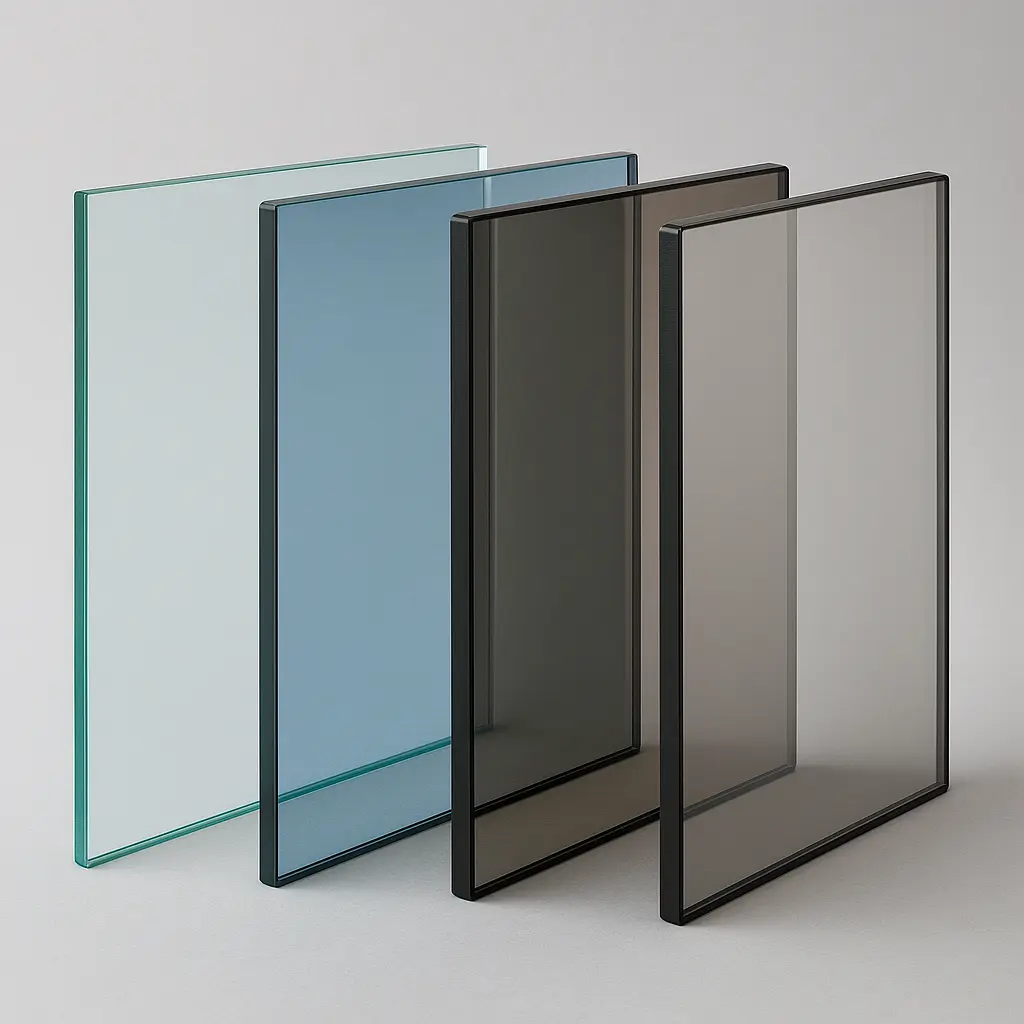
Choosing glass for windows and doors is not only a visual decision. Different types of window glass directly affect thermal comfort, daylight, acoustic performance, and energy use inside the home or project.
Why Glass Type Matters
Glass plays a central role in modern architecture, whether in residential or commercial buildings. It is no longer only a transparent material that allows light to pass through; it has become part of the facade performance by reducing heat, improving comfort, and shaping the building's appearance from inside and outside.
With the variety of projects in the Gulf market, many glass options are available from global and regional suppliers. This guide simplifies the main differences so the conversation with your architect, contractor, or glass supplier becomes clearer.
1. Glass Suppliers in the Local and Gulf Market
In the local and Gulf markets, flat glass is available from prominent suppliers such as Guardian, an American company with factories in Saudi Arabia and the UAE, AGC from Belgium, known locally through Al Obaikan glass, and Emirates Float Glass.
Imported glass from Saint-Gobain in France is also available, along with Turkish and Chinese glass. Although brand names differ from one supplier to another, the main glass types are similar in principle and do not vary greatly in basic performance.
2. Main Types of Glass for Windows and Doors
Clear Glass
Clear glass is the base and most commonly used option, either in double-glazed units or as a single pane. It can also serve as the foundation for later coating or tinting, depending on the project requirements.
Tinted Glass
Tinted glass is produced during manufacturing by adding metal oxides that give the glass colors such as green, gray, or bronze. It reduces sunlight and adds an aesthetic touch to facades, but it is less commonly used today because it does not insulate heat as efficiently as coated glass.
Coated Glass
When glass is coated with a thin metallic layer, such as silver or oxides, it changes from ordinary glass into a product that can control heat and light. This is commonly known as reflective glass.
| Type | Best use | Performance note |
|---|---|---|
| Clear | Economical choice or inner pane in double glazing | Limited thermal performance on its own |
| Tinted | Facades that need color or mild glare reduction | Moderate solar control |
| Coated / Low-E | Homes and offices that need better insulation | Best balance between daylight and heat reduction |
3. Low-E and Double Silver Glass
Low-E, or low-emissivity glass, is a coated, energy-efficient window glass that reduces heat transfer while preserving useful daylight. It is one of the most common thermal insulating glass options for modern windows and doors.
Among the different options, Guardian DS (Double Silver) glass is one of the most widely used choices in the local market. It offers high thermal insulation efficiency while allowing comfortable natural light into the space, making it suitable for modern residential and commercial projects.
It is available in several colors, such as green, dark black, blue, and bronze. It is also worth noting that Low-E glass comes in several product series, with differences in appearance and performance depending on the project requirements.
A Note About HD Glass
HD glass is also one of Guardian's products. It is a colored coated glass with high clarity and multiple aesthetic color options, but it is not classified as Low-E glass. In other words, it provides an attractive appearance and moderate heat reduction, while DS remains the stronger option in terms of thermal performance.
4. Double Glazing and Thermal Performance
Double glazing consists of two glass panes with a 12 mm gap usually filled with air. The performance of this insulated glazing unit varies depending on the window glass types used in its inner and outer panes.
- A standard unit made only with clear glass provides a U-Value of approximately 2.8 W/m²K.
- When HD glass is combined with clear glass, the value improves slightly to around 2.5 W/m²K.
- When DS glass is combined with clear glass inside a double-glazed unit, the value can drop clearly to 1.6 W/m²K or lower.
This difference in insulation reduces heat transfer, improves indoor comfort, and can lead to noticeable energy savings.
5. Additional Treatments After Cutting
All glass types, whether clear, tinted, or coated, are cut first and can then be processed further depending on the project requirements.
- Tempered glass: The glass undergoes heat treatment that makes it around five times stronger than regular glass. When broken, it shatters into small, less sharp pieces, similar to a car's side or rear window.
- Laminated glass: This consists of two or more layers of glass with a plastic interlayer (PVB) between them. When broken, the glass remains held together and helps prevent shards from scattering, making it safer and providing additional acoustic insulation, similar to a car windshield.
6. How to Choose Window Glass in Oman
When comparing glass types for aluminium windows, sliding windows, or doors in Oman's hot climate, consider the facade orientation, opening size, solar exposure, thermal and acoustic targets, and safety requirements. Clear glass may suit some internal openings, while sun-exposed facades often benefit from coated or Low-E glass. Large doors and sliding windows may also require tempered or laminated glass for safety.
What Affects Window Glass Cost?
Cost depends on thickness, pane size, color, coating, single or double glazing, and additional tempering or laminating. Compare price together with U-Value, SHGC, and safety performance instead of judging a glass option by color or thickness alone.
7. Conclusion
Clear glass is the foundation, while tinted glass has become less common in favor of coated glass. Within the coated glass category, HD is a popular choice because it offers high clarity and an elegant appearance with moderate thermal insulation suitable for many projects.
For projects that require stronger thermal insulation, Low-E glass is usually the better direction, especially DS (Double Silver), as it significantly reduces heat transfer while maintaining natural light entry. The best result comes when the glass and aluminum system are selected as one complete system, not as separate items.
0 class
There are no comments yet. Be the first to comment on this post.